How Flying Probe Testing and Electrical Verification Raised a Customer’s First-Pass Yield to 99.9%
An industrial OEM was receiving about 15% of its printed circuit board assemblies defective from its previous contract manufacturer when it moved the work to Kodiak.
When a contract manufacturer keeps shipping defective assemblies, every week spent living with it costs the OEM time, resources and money. For this customer, the answer was a new manufacturer and a test strategy built around flying probe testing.
A Growing Pile of Defective Assemblies
The boards from the previous contract manufacturer failed often enough that the customer’s technicians had no time to troubleshoot them. Stopping production to find the cause would have disrupted the factory floor, so the failing boards were set aside.
That pile kept growing, and nobody had time to work out why the boards were failing. Once the share of defective assemblies was too large to ignore, the customer moved its printed circuit board assembly to Kodiak and found it did not have to live with defective boards.
Flying Probe Testing at Kodiak
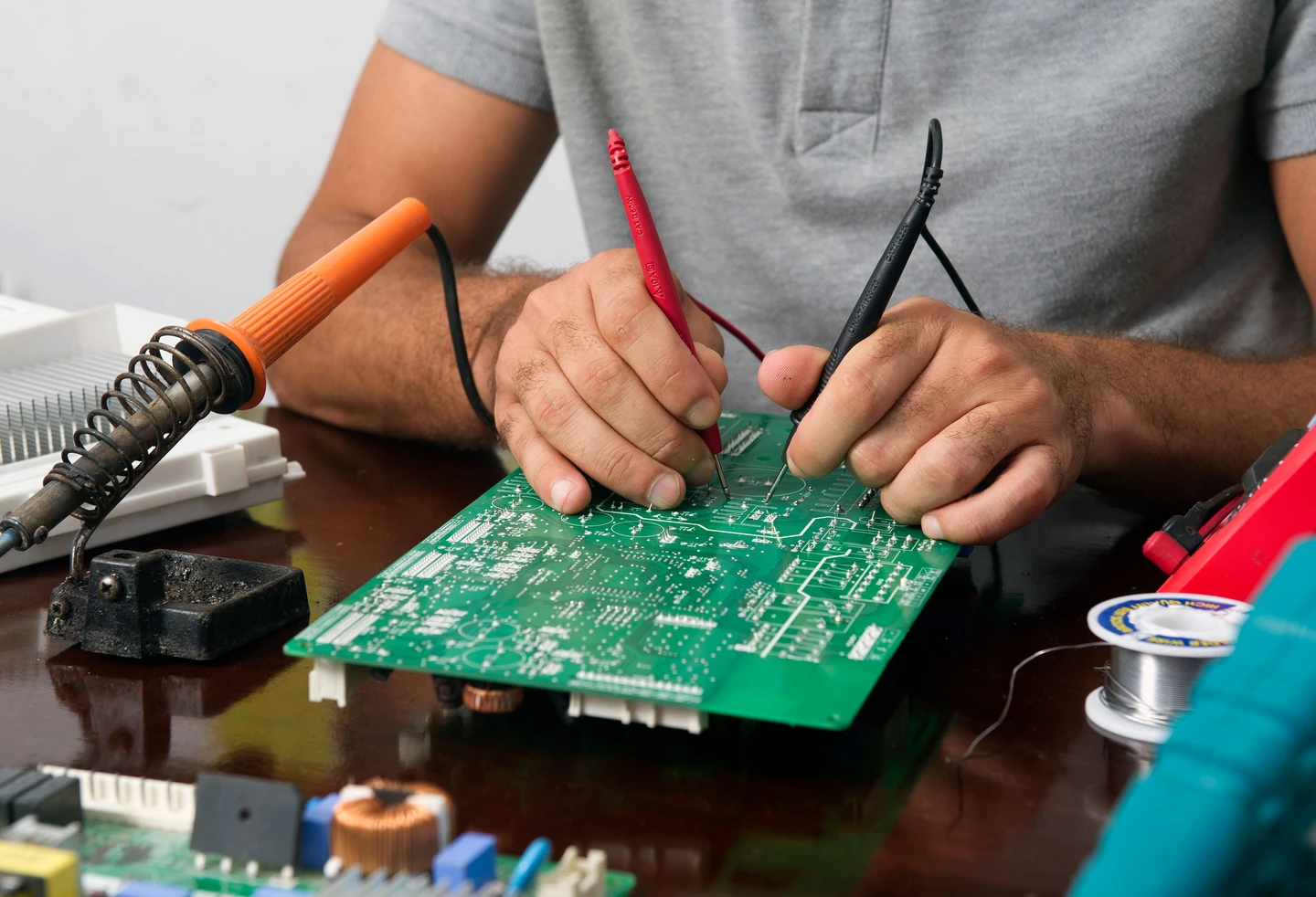
Kodiak proposed flying probe testing to raise the customer’s first-pass yield. A flying probe tester moves electro-mechanically controlled probes across a printed circuit assembly to reach individual components, so it suits production in low to mid volumes.
The test finds shorts, opens, missing components, components of the wrong value, reversed polarity and more. It is also a cost-effective way to cut the time spent debugging boards.
Kodiak built the electronic test solution around a Takaya flying probe tester and paired it with electrical verification. With both in place, the quality of the assemblies rose sharply. Both are part of Kodiak’s in-house testing.
From About 15% Defective to 99.9%
First-pass yield, sometimes called throughput yield, measures how well a process works and how much waste it removes. Other measures of productivity and efficiency often leave out the cost of rework, and in many facilities rework is a significant share of the time and value added to a product. First-pass yield is the number of units coming out of a process divided by the number going into it over a set period, counting only units that needed no rework and were not scrapped.
For a customer seeing about 15% of its assemblies come out defective, a higher first-pass yield was the way to stop losing time, resources and product to the problem.
With flying probe testing and electrical verification, the boards Kodiak produced reached a 99.9% first-pass yield. The customer quickly caught up with its production requirements and moved its technicians back to other work.
Handing a build to a manufacturer also hands it part of the OEM’s reputation. Defective boards slow output and cost time, energy and resources to diagnose, so Kodiak’s inspection and test are set up to catch them before the boards ship.