Building the Boards Behind NXP’s BlueBox and Miele’s Dialog Oven
One is a platform carmakers use to develop and test self-driving capability; the other is an oven that cooks with radio frequency energy. Inside both are printed circuit boards Kodiak assembled.
Companies keep building products that change how everyday things get done, and as a manufacturing partner Kodiak often helps them on that path from design to finished product.
Two of those products are NXP’s BlueBox, for self-driving development, and Miele’s Dialog oven.
NXP BlueBox
NXP’s BlueBox is a development platform for building and testing self-driving capability in cars. Kodiak assembled the printed circuit boards that go into it.
The BlueBox engine pairs NXP’s S32V automotive vision processor with its LS2088A embedded compute processor, and it delivers 90,000 DMIPS of performance at under 40 watts, according to NXP.
The platform brings together radar, lidar and vision sensing with an onboard V2X system. NXP said in May 2016 that BlueBox was already in the hands of four of the top five carmakers, and that it had been shipping to select customers since September 2015.
Driver assistance, from braking assistance to steering that keeps a car from drifting out of its lane, has been in cars for some time. Self-driving development goes further, and NXP describes the goal as improving car safety by managing and preventing emergency situations.
Miele Dialog Oven
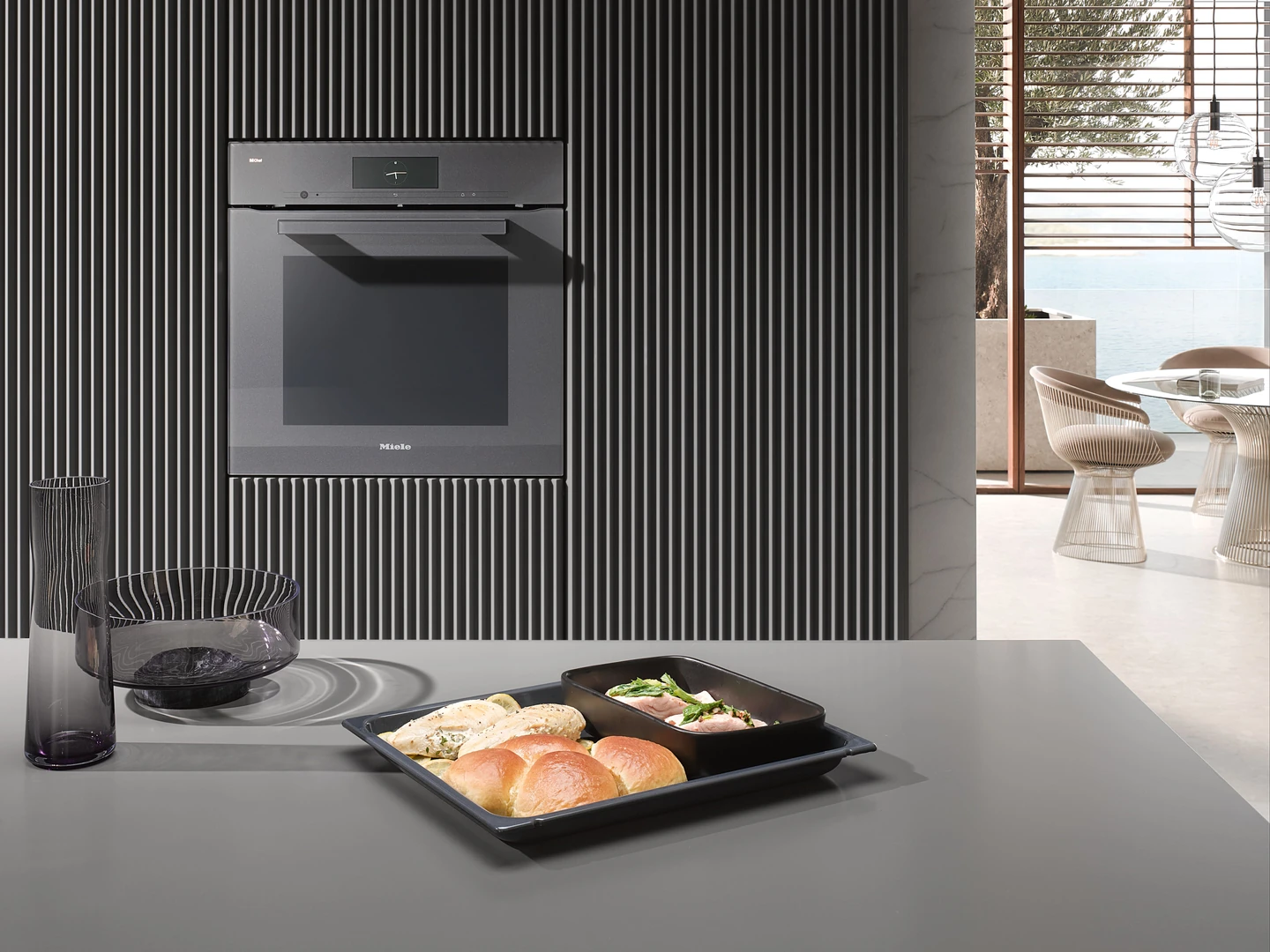
Miele unveiled the Dialog oven at the IFA trade show in Berlin in 2017, with a launch in Germany and Austria planned for April 2018, Appliance Retailer reported. Kodiak assembled the printed circuit boards that go into the oven and control how it works.
The Dialog cooks with electromagnetic waves, a technology Miele calls M Chef, always combined with radiant heat. Two antennas distribute the waves through the oven and also report how much of that energy the food has taken up, and the frequency is adjusted continuously as the food cooks. The method is a form of dielectric heating, similar to a microwave but more precise.
At its IFA press conference, Miele cooked a fish fillet embedded in a block of ice while the ice stayed frozen. Miele also said different foods on one tray, such as salmon and puff pastry, finish at the same time and up to 70% faster than with conventional cooking methods.
Cooking with solid-state radio frequency energy has other advantages. RF power transistors have an operating life of years rather than hours, keep their output power without degradation, and run at safer low voltages, according to NXP. NXP also says the method helps food keep its moisture and nutrients.
Helping Shape the Products Ahead
Kodiak builds printed circuit board assemblies and complete electronics products for customers across many markets. From self-driving development to a new way of cooking, the boards it assembles go into products that are still taking shape.