Surface Mount Technology: Why SMT Overtook Through-Hole
Surface mount technology made boards smaller, denser and faster to build, and fewer drilled holes and smaller parts usually made them cheaper too.
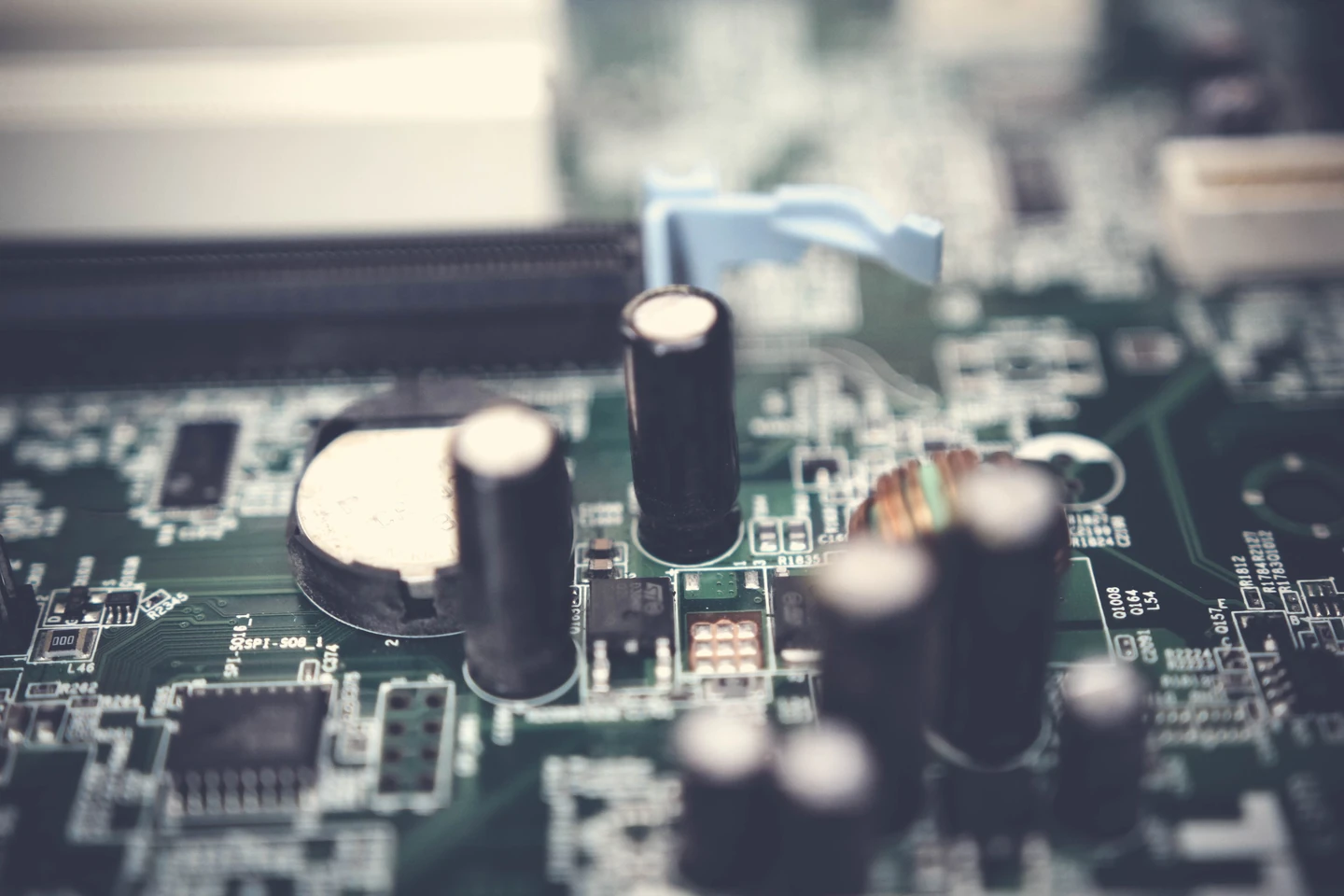
Surface mount technology, or SMT, solders components onto pads on the surface of a board instead of pushing their leads through drilled holes. It gained momentum in Japan in the 1980s and was in wide use worldwide by the mid-1990s, according to ASSEMBLY magazine.
The draw was board space. With no leads running through the board, parts can be far smaller, sit closer together, and go on both sides of the board. Alex Goldstein of Georgia Tech’s Center for Board Assembly Research told ASSEMBLY that as components shrank and I/O density rose, board real estate was too valuable to spend on drilling holes for leads.
Faster, Automated Assembly
SMT is built for automation. Once a line is programmed and its feeders are loaded, placement machines set parts down at high speed, and each side of the board solders in a single pass through the reflow oven.
Molten solder helps a little. Its surface tension can pull a slightly misplaced chip component back toward its pads during reflow, and in tests on 0603 chip components published in Periodica Polytechnica, parts placed 0.4 to 0.5 mm off position still self-aligned. The same study notes that small chip components need very accurate placement machines to prevent skewing and tombstoning, so placement accuracy and inspection still do the real work.
Lower Cost per Board
Smaller parts use less material, a board with fewer drilled holes is simpler to fabricate, and automated placement cuts the handling each board needs. Together, those usually make a dense board cheaper to build with SMT.
Better High-Frequency Behavior
Short connections help electrically. A component lead acts as a small inductor, about 1 nH per millimeter of lead, while a typical surface mount part carries about 0.5 nH. That is why surface mount parts are the preferred choice for electromagnetic compatibility, according to an application note from Freescale, now part of NXP.
Better Stability
With less component mass, surface mount parts hold up better under vibration and shock, so a finished device is less likely to be damaged if it is dropped or shaken.
SMT at Kodiak
Kodiak builds SMT and mixed-technology PCB assemblies from prototype to production and supports OEMs from the design stage onward. By January 2018, Kodiak had added a Fuji XPF to its SMT line.